Why I Stopped Telling Children to “Pay Attention” — The Story Behind Cal and His Amazing Attention Pie

Why I Stopped Telling Children to “Pay Attention” — The Story Behind

Cal and His Amazing Attention Pie

By Michaela Gordon OTR/L

I remember sitting in a class somewhere around 2006 or 2007 when the instructor said something that stayed with me. Researchers could measure different aspects of attention, but attention itself wasn’t nearly as simple as people often made it sound. That comment stuck with me, partly because I had spent much of my own life hearing the same words many children hear: “Pay attention.”


What always puzzled me was that I thought I was paying attention.


I wasn’t staring at the teacher or necessarily listening to directions, but my mind wasn’t empty either. I was thinking about something. Planning. Daydreaming. Remembering the feeling of my body moving through the water as I swam. Following butterflies while the soccer game carried on around me. Watching other people. Wondering about something I was touching. My attention had gone somewhere.


That question stayed with me:


If I’m always paying attention to something, then what exactly do people mean when they tell me to “pay attention”?


Years later, while working with a little girl in therapy, I began experimenting with that question. Instead of assuming she wasn’t paying attention, I wondered whether her attention was simply somewhere different than where the adults around her wanted it to be.


Originally, I thought about three spaces: Mental Space, People Space, and Touch Space.


Mental Space was where thoughts lived. It was planning, remembering, imagining, daydreaming, and simply letting your mind wander. Sometimes we drift into Mental Space and don’t even realize it. Other times, it’s where our creativity and best ideas come from.


People Space was harder to describe. It wasn’t just about socializing. It was more about sharing awareness with others and understanding what the moment called for. A child crossing the street with Mom, participating in a lesson, having a play date, or working together with friends might need a larger People Space. People Space wasn’t about everyone doing the same thing. It was about being aware of what was happening around you and what was expected in that moment.


Touch Space originally meant touching things, but over time I realized it was much bigger than that. It wasn’t just exploring objects with our hands. It included fidgeting with your feet, leaning against furniture, rolling on the floor, tilting your chair back, pressing your body into things, and becoming completely absorbed in building, creating, or feeling the physical world around you. Sometimes Touch Space can help us focus, and other times it can become so big that everything else disappears.


Years later, after learning more about interoception, I realized something was missing: Body Space.


Our bodies are constantly sending us messages in the background. Hunger, fatigue, temperature, the need to use the bathroom, anxiety, excitement—the list goes on. Our bodies are constantly helping us regulate and letting us know what we need. Sometimes those signals are quiet, and sometimes they become so loud that they naturally take up more of our attention.


Eventually, I realized something important: people are almost never paying attention to nothing. Even when our attention isn’t where others expect it to be, it’s usually somewhere.


Even while we sleep, our brains are still processing information. Most of us are never completely in one space. Instead, our attention is divided among thoughts, physical sensations, touch and movement, and awareness of the people and events around us.


That’s where the idea of the pie chart came from.


I began thinking about attention as a pie whose slices could grow bigger or smaller.


The spaces themselves weren’t good or bad. Bigger wasn’t always better.


The question wasn’t, “Which space should I get rid of?” The question was, “What size should each slice be right now?”


If you’re riding in the car on a road trip with a book in your hands, it makes sense for Mental Space and Touch Space to be larger while People Space becomes smaller.


If you’re crossing the street with your mother, People Space needs to become much bigger.


If you’re creating artwork or building something, Touch Space may become the largest space and help you stay engaged.


If you’re anxious before performing in front of others, your Body Space may suddenly become huge because your racing heart, sweaty hands, and butterflies in your stomach are telling you that something important is happening.


Or maybe you’re in a museum and someone reminds you not to touch the exhibits, but you find yourself fascinated by the texture of the paint sticking up from the canvas or the tiny details on a sculpture. If your Touch Space becomes much bigger than your People Space, you may end up frustrating the people around you, accidentally breaking something, or feeling bad afterward—not because you’re bad or because you weren’t paying attention, but because your attention was focused in a space that wasn’t the best fit for that particular situation.


Sometimes our spaces help us. Sometimes they don’t fit the situation. The important part is learning to notice.


For some people, especially those with ADHD, that process can be harder.


There are many systems involved. Executive functions help us plan and think ahead. Sensory systems provide information that helps us regulate. Alertness systems help us wake up and sustain attention. Motivation and reward systems influence what feels interesting enough to stay with. Anxiety and emotions can also take over and make it difficult to think clearly.


Attention isn’t one thing. It is many systems working together.


Which is why I gradually became less interested in telling children to “pay attention.”


Of course, I still catch myself saying it sometimes. We all do. Life gets busy, and sometimes we’re trying to stop something quickly. But over time, I realized that repeatedly saying “pay attention” wasn’t really teaching a skill.


Nothing changes simply because someone hears those words.


First, we have to figure out where our attention is. Then we can take actionable steps to shift it.


Instead of asking children to “pay attention,” I became more interested in helping them ask:


“What am I paying attention to right now?”

“What space am I in?”

“What space would help me the most?”


Because if we’re forever reminding children to pay attention without helping them understand where their attention is, no skill is really being built.


I wanted to find a way that I could share this concept with others, which is why I wrote Cal and His Amazing Attention Pie.


Through Cal’s classroom presentation, children are introduced to Body Space, Mental Space, Touch Space, and People Space. They learn that no space is “good” or “bad.” They discover that attention is always changing and that they can learn to notice where they are and make adjustments when needed.


The book is filled with humor and grace because I believe that is the way it should be. We want kids to feel curious and accepting of all parts of themselves.


Struggling with attention is not a moral failure. In fact, many children are doing amazing things in the spaces they naturally spend time in. The key is timing and learning how to shift so they have some agency over how they spend their time. This gives them opportunities to grow—not only in the areas where they are already strong, but also to develop other skills that will support them throughout their lives.


I also wanted the book to support the adults who care for children. That’s why the back of the book includes resources for parents, teachers, and therapists. I explain some of the brain systems involved in attention, offer practical sensory and cognitive supports, and provide ideas for helping children build awareness and flexibility instead of relying only on reminders like “Pay attention.”


My hope is that children come away with a new understanding of themselves.


My hope is that children stop asking, “What’s wrong with me?” and start asking, “What am I paying attention to right now, and is it helping me?”


Because attention isn’t something children fail at. It’s something they can learn to notice, understand, and gradually shape.


If you’re interested in learning more, you can pick up a copy of Cal and His Amazing Attention Pie on Amazon and use it as a shared reference with the children in your life. My hope is that the story and caregiver resources will provide a common language that helps children, families, teachers, and therapists better understand attention together.

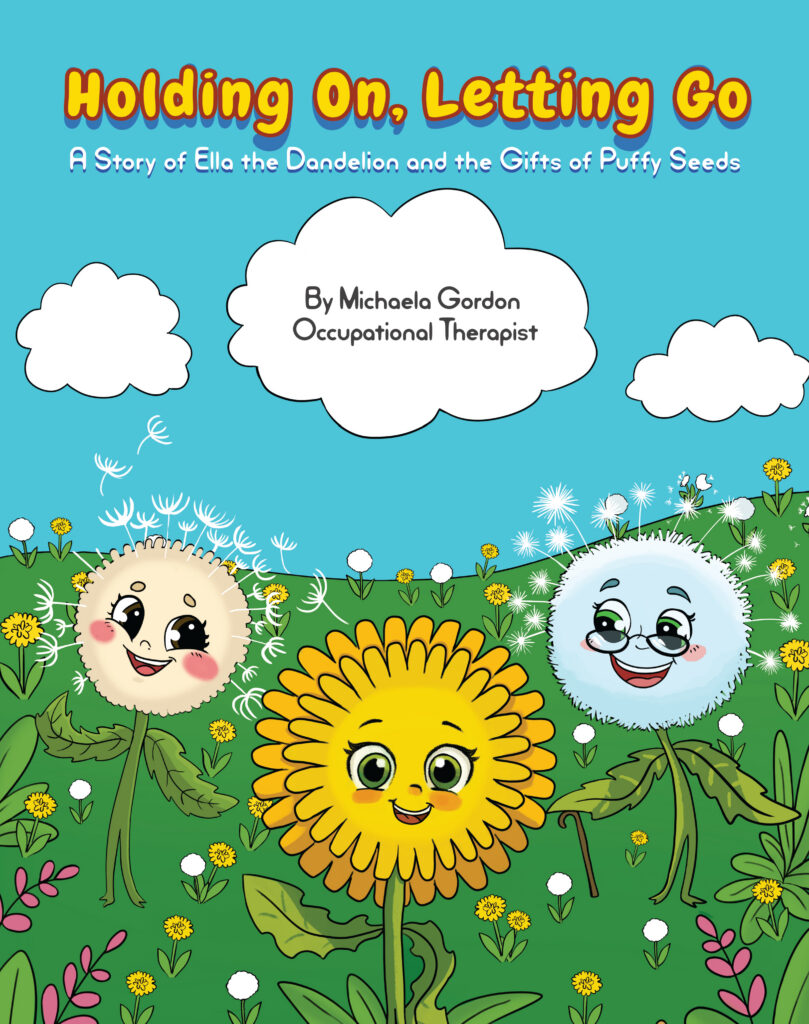
Holding On, Letting Go

Holding On, Letting Go:

Why I Wrote This Book

By Michaela Gordon, OTR/L


I published Holding On, Letting Go at the end of last year, but the story itself had been with me for a long time.


It was a book I kept coming back to—one that unfolded over time. It began as a quiet contemplation, and when I first put it into words, it came quickly. But shaping it into something that felt safe for children and meaningful to share took time, care, and intention.


There were experiences that made me think about what it means to love someone, to grow, and eventually, to let go.


Watching families move through change—especially when a child is involved—has a way of staying with you. It invites questions that don’t always have easy answers.


At the same time, I was in a season of change myself—and that, too, became part of the story.


There are moments in life that bring you face-to-face with what really matters. Moments that shift your perspective. Moments that ask you quietly but persistently, to hold on to what is meaningful… while also learning how to let go of what you can’t control.


That tension—between holding on and letting go—became the heart of this book.


As an occupational therapist, I often think about how much our sense of safety comes from the rhythms of our lives. The people we see every day. The routines we rely on. The connections that ground us.


When those are disrupted—whether through loss, change, or uncertainty—it can feel incredibly disorienting.


For children, this can be especially hard.


Grief doesn’t look the same for every child. Some want to talk. Some don’t. Some ask questions, and some process through play, movement, or simply being close to someone they trust.


There is no one right way.


Our role isn’t to rush them through it—it’s to meet them where they are.


In occupational therapy, we support children by helping them feel safe in their bodies, regulated in their nervous systems, and connected to the world around them. We help rebuild a sense of predictability through routine, relationship, and meaningful activity.


Sometimes, a story can become part of that support.


Holding On, Letting Go tells the story of Ella, a little dandelion, and the conversations she shares with her mom and grandma as she begins to notice change. Through their relationship, she learns that life is always moving—growing, shifting, and evolving—and that love continues, even when things look different.


If you had asked me ten years ago if I would be writing children’s books, I would have said no. But I wrote one—and then I wrote another. This was the second.


I was hesitant to share it. It holds a sensitive and meaningful topic, and that carried a lot of weight for me. But the story came to me in a way that felt clear and important, and I knew it was something I needed to write.


Since publishing it, I’ve been able to share this book with families during moments when they needed it most. I’ve also shared it with individuals who have experienced loss, and it has brought them great comfort. You’re truly never too old for a children’s book.


Some of us are preparing for change.

Some of us are moving through loss.

And some of us are simply trying to find the right words to support the people we love.


What I’ve learned is this:


It’s not just a children’s book.


It meets people wherever they are.


Because there’s a part of us that’s still learning how to hold both joy and pain… how to stay present with all that we love, while also making space for what we can’t hold on to forever.


My hope is that this book offers a gentle place to begin.


A way to open conversations. 


A way to sit with big feelings. 


And a reminder that even in letting go, love doesn’t disappear—it continues on, in ways we can still feel.


If you feel like this book could support you or someone you love, you can find Holding On, Letting Go here: 


https://a.co/d/05xJWlhS


It’s one of those books people often don’t think they need—until the moment they do.


Clearing Up PDA Theory

Beyond High Demand and Low Demand: A Flexible Approach to PDA

By Michaela Gordon, OTR/L

Over the past year, conversations about PDA (Pathological Demand Avoidance) have grown louder — and sometimes more divided.

Some voices emphasize nervous system safety above all else.

Others emphasize skill-building and resilience.

Many parents are left wondering where they fit in that spectrum.

This post isn’t here to take sides. It’s here to widen the lens.

Because children are complex. Development is complex. And no single explanation captures every child fully.


What Is PDA?

PDA was first described in the 1980s by psychologist Elizabeth Newson in the United Kingdom. It is not currently listed as a separate diagnosis in the DSM-5 or ICD-11.

Today, PDA is generally described as a profile seen in some autistic children. Common characteristics include:

  • Intense resistance to everyday demands

  • High anxiety

  • Strong need for autonomy

  • Emotional reactivity

  • Periods of shutdown or escalation

Many children described as having PDA traits also meet criteria for autism. Whether it is a subtype, profile, or overlapping presentation is still debated in research.

What is clear is this: the children described under this profile often experience demands as disproportionately stressful.


The Nervous System Explanation

In some communities, PDA is described primarily as an autonomic nervous system response — meaning everyday demands are perceived as threats, triggering fight, flight, or freeze.

From this perspective, reducing demands (often called a “low-demand approach”) is seen as protective and supportive. Many families report that lowering pressure reduces conflict and improves connection.

That makes sense. When stress decreases, capacity increases.

But regulation is influenced by more than one system.

A child’s ability to handle demands may be shaped by:

  • Autonomic nervous system state

  • Sensory processing patterns

  • Executive functioning skills

  • Cognitive flexibility

  • Motor planning abilities

  • Interoception (body awareness)

  • Environmental stress load

No nervous system exists in a permanently fixed state. Capacity shifts day to day.

When a child struggles more than usual, that is not regression. It is responsiveness to stress.


Regulation First — But Not Regulation Only

You may hear the phrase: “Regulate first, then proceed.”

This is important. Children cannot learn new skills when they are overwhelmed.

But it’s also important to remember something else:

Learning always involves some stress. Trying something new, losing a game, making a mistake, or shifting plans. Discomfort is part of growth. The goal is not to eliminate stress completely.

The goal is to keep stress in a manageable range. Too much stress leads to shutdown. Too little stress can prevent growth. Supported stress builds resilience.

When a child shows intense avoidance, it signals that their stress system activates quickly. In those moments, the adult’s role is to stay regulated, stay connected, and calibrate the level of challenge carefully. We do not abandon expectations. We adjust the path toward them.

Safety means we do not push a child past their limit for the sake of compliance. It does not mean eliminating all discomfort. Children need safety from overwhelm. They also need experiences that build mastery.


The Risk of Over-Reduction

When PDA is explained solely as chronic nervous system flooding, there are potential risks:

  • Assuming dysregulation is permanent

  • Removing developmental challenges entirely

  • Reinforcing avoidance instead of building skills

  • Overlooking executive or motor skill gaps

In the short term, reducing demands can bring real relief. Stress lowers. Conflict decreases. Relationships stabilize. That matters!

But children described as having PDA traits also have goals.

They want friendships, competence, and  independence. They want to grow.

The struggle is rarely a lack of desire. It is often an internal conflict between overwhelm and expansion.

Too little challenge can quietly narrow a child’s world.

This does not mean children need more pressure.

It means they need calibrated support. The goal is not high demand and it’s also not no demand. The goal is thoughtful demand — challenge matched to capacity, inside connection.


From Low Demand to Flexible Demand


Rather than eliminating demands indefinitely, I propose a concept I call Flexible Demand — adjusting expectations to match a child’s current regulation bandwidth. 


Within this framework, I conceptualize support in bands — reflecting a child’s regulation bandwidth — rather than fixed, progressive levels. 


Children move fluidly between support bands, as internal and external factors continually shift their window of tolerance. This movement is not necessarily regression —it is responsiveness to changing demands and environments.


Band A – Stabilization Mode

Reduce performance pressure. Increase predictability. Simplify tasks.

Band B – Scaffolding Mode

Introduce just-right challenges. Use collaboration. Gently expose to manageable discomfort.

Band C – Expansion Mode

Increase autonomy. Reduce scaffolds. Allow natural consequences with emotional availability.

Movement between bands is expected and healthy.


When Behaviors Feel Severe

It is also important to recognize that not all intense avoidance is purely developmental.

If you notice:

  • Sudden regression in skills

  • Extended mutism

  • Prolonged shutdowns

  • Episodes of unresponsiveness

  • Self-injury or dangerous aggression

  • Abrupt changes in baseline functioning

Medical or mental health evaluation may be appropriate.

Conditions such as seizure disorders, mood disorders, catatonia in autism, or other co-occurring challenges can sometimes present in ways that look like extreme avoidance.

Seeking clarity is not a failure. It is advocacy.


We’re Better Together

There are many conversations happening right now about PDA. Some prioritize nervous system safety. Others emphasize skill-building and graded exposure. Some focus strongly on autonomy. Others on structure.

Underneath the different language and models, most parents and professionals share the same goal:

We want children to feel safe, understood, and to grow into capable, confident humans.

We do not have to choose between compassion and challenge.

We do not have to choose between safety and growth.

These ideas do not compete.

They can work together.

If we stay curious instead of defensive…

If we stay collaborative instead of divided…

If we remember that no parent is trying to harm their child…

Then we are already moving in the right direction.


If this framework resonates with you, I’ve created a more detailed parent guide that expands on these ideas and offers practical examples of using the Flexible Demand model in everyday situations. 


If you’d like a copy, feel free to reach out – I’m happy to share it. 

What Pediatric Occupational Therapy Is (and isn’t)! By, Michaela Gordon, OTR/L

What Pediatric Occupational Therapy Is (and Isn’t)!

By Michaela E. Gordon, OTR/L

 
Throughout my time as an OT, I have worked hard to find ways to capture, explain, and demonstrate the full scope of occupational therapy. I think back to all the settings I have worked in and how I worked as an occupational therapist in those settings/systems. Each setting taught me something new that I carried into the next—broadening my understanding and deepening my practice as an OT.  Here are some examples from my experience as an OT over the years:


  • Mental Health Center: Collaborated with a multidisciplinary team of medical professionals to discuss cases and coordinate care, facilitated self-care and life-skills groups, and developed sensory-based programs to support regulation and coping.
  • Pediatric Burn Hospital: Fabricated splints in the operating room to support long-term range of motion in the upper extremities, fitted facial orthoses and pressure garments to minimize scarring, developed adaptive devices for self-care tasks, and provided emotional support to patients and families navigating recovery.
  • Hospital Setting: Supported infants in the NICU to promote feeding and sensory regulation, conducted neuro-motor and self-care assessments for adults in acute and subacute units, and designed discharge plans to promote safe transitions home or to other care facilities.
  • Nursing Homes: Addressed memory and cognitive strategies for daily routines, and implemented strength, coordination, and range-of-motion programs to improve independence in self-care and mobility.
  • School for Children with Autism: Collaborated closely with a team of medical and educational professionals to provide sensory–motor, social–emotional, and self-care interventions; trained parents and teachers on carryover strategies; and supported community participation through vocational and independent-living experiences such as starting jobs at local businesses, shopping, money management, and dining out.
  • Public Schools: Conducted school-based assessments, provided direct services for students with identified needs, consulted with teachers to support students who did not qualify for services, and participated in IEP meetings to collaborate with families and interdisciplinary team members.
  • Aquatic Therapy: Used neurodevelopmental and sensory-based techniques in the water to promote regulation, strength, coordination, and safety.
  • Early Intervention: Provided home- and community-based services to infants and toddlers, focusing on early sensory–motor, fine motor, and self-care development. Supported parents and caregivers through education, hands-on training, and individualized home programs.
  • Clinic-Based Practice: Served children of all ages, with an emphasis on sensory–motor development, fine motor skills, and self-regulation. Ran early intervention and social skills groups, collaborated with other professionals (e.g., PTs, SLPs), and provided home programming and parent training to promote skill carryover.
  • Private Practice (In-Home): Worked with families in their natural environments to support sensory–motor, self-care, social–emotional, and executive functioning skills. Designed individualized home programs, provided parent education, and integrated holistic interventions such as aquatic therapy and craniosacral therapy.
  • Private Practice (Office Setting): Offer similar services to in-home care with expanded access to specialized equipment and materials, incorporating sensory–motor play, regulation-based supports, and holistic interventions.
  • Community Outreach: Partner with schools and community centers to educate families and professionals about occupational therapy, facilitate support groups, help with developing community programs, and promote public awareness through blogs, social media, and outreach materials.


Each of these settings offered unique insights into how occupational therapy helps individuals adapt, recover, and grow. Whether in hospitals, schools, clinics, or the community, the common thread is helping people participate more fully and meaningfully in their everyday lives.


As you can see, the role of the OT can widely vary based on the setting/system, the role of the other professionals involved, and the experience of the therapist. I’m sure you could meet another OT that will tell you other ways they have worked in the field.


In terms of pediatrics, I would say pediatric occupational therapists are most well-known for helping kids with developing sensory and handwriting skills. However, we do so much more than that! I find that once an OT starts working with other professionals and families, they are often surprised to find out all the ways we can help kids and families.


Occupational therapy is one of the most versatile fields in healthcare. While it overlaps with psychology, physical therapy, and speech therapy, OT is distinct in its focus on helping children participate in the many occupations of daily life—everything from getting dressed and playing, to learning, socializing, and building independence. Our goal is to strengthen the skills that make everyday living meaningful and successful.


The Domain of Occupational Therapy (AOTA, OTPF-4)


According to the American Occupational Therapy Association (AOTA), the domain of occupational therapy outlines the full range of areas OTs address to support meaningful participation in daily life. This framework is described in the Occupational Therapy Practice Framework: Domain and Process, 4th Edition (OTPF-4, 2020).


The domain is composed of five interrelated areas:


1. Occupations – The everyday activities people want, need, or are expected to do. For children: play, education, self-care, rest/sleep, and social participation.
2. Client Factors – The underlying capacities that influence performance. Includes values, beliefs, body functions (sensory, cognitive, emotional, motor), and body structures.
3. Performance Skills – The observable, goal-directed actions used in daily life. Includes motor skills (e.g., posture, coordination), process skills (e.g., organization, attention), and social interaction skills.
4. Performance Patterns – The habits, routines, and roles that structure daily life. For children, these may include school routines, bedtime rituals, and family roles.
5. Contexts – The environmental and personal factors that influence participation. Includes physical, social, cultural, temporal, and virtual environments.


Together, these areas describe the scope of what OTs assess and address—providing a holistic, person-centered framework that supports participation across all areas of life.


In the following sections, I describe what this looks like in practical terms—how occupational therapists may help children and families build the skills and supports they need for everyday life.


What OT Is


Occupational therapists support the whole child—addressing interconnected systems of sensory, motor, cognitive, and emotional development. These domains are interdependent and together build a child’s capacity to learn, connect, and thrive in daily life. Below are the primary areas pediatric OTs focus on when helping children reach their fullest potential.


Sensory Integration and Other Sensory-Based Approaches


Occupational therapists (OTs) assess and treat sensory integration challenges using evidence-based approaches that help children process sensory input more effectively and participate more fully in everyday activities such as play, learning, and self-care. One of the most established models is Ayres Sensory Integration® (ASI), developed by Dr. A. Jean Ayres, which focuses on enhancing the brain’s ability to organize and interpret sensory information through play-based, child-led activities.


In addition to ASI, OTs may draw from a range of sensory-based and sensory-informed frameworks to address individual differences in regulation and participation. These may include the Sensory Processing Model (Winnie Dunn), which helps identify sensory seeking or avoiding patterns to guide environmental adaptations; The Alert Program® (“How Does Your Engine Run?”) and The Zones of Regulation®, which teach children to recognize and manage their arousal states; and the Sensory Diet Framework (Patricia Wilbarger), which provides structured daily sensory activities to promote attention and self-regulation.


OTs may also incorporate specific sensory-based modalities—such as the Wilbarger Deep Pressure and Proprioceptive Technique (Brushing Protocol), Therapeutic Listening® (Sheila Frick), and Astronaut Training, which integrates vestibular, visual, and auditory processing—when clinically appropriate and with specialized training.


All of these approaches are used within an individualized, occupation-centered treatment plan that supports the child’s ability to regulate, attend, and engage meaningfully in daily routines across home, school, and community settings.


Gross Motor & Physical Development


Occupational therapists address foundational movement skills that support a child’s ability to play, learn, and participate in daily life. This includes developing balance, coordination, postural control, strength, endurance, and body awareness.


A core focus of gross motor development is bilateral coordination—helping the left and right sides of the body work together in an organized way. OTs also support motor planning, or the ability to generate motor ideas, plan and sequence actions, and carry them out with timing and fluidity.


Through engaging, play-based movement activities, children build the gross motor foundations they need to participate in functional tasks at home, school, and in the community—from climbing and playground play to navigating hallways, carrying materials, and maintaining posture during classroom activities.


Fine Motor & Visual–Motor Skills


Occupational therapists help children develop precise hand movements, coordination, and control that support participation in everyday activities such as dressing, feeding, writing, and play. This includes building hand strength, grasp patterns, in-hand manipulation, and bilateral coordination for tasks that require both hands to work together.


At the fine motor level, OTs also address motor planning—helping children generate ideas, plan and sequence actions, and carry them out smoothly with appropriate timing and fluency. This process allows children to approach fine motor tasks such as cutting, coloring, writing, manipulating small toys, and using everyday objects like containers and bags with greater confidence and efficiency.


OTs also support visual–motor integration, helping children coordinate what they see with how they move. These skills are essential for tasks like handwriting, lining up numbers for math, completing mazes or tracing paths, and connecting dots—all of which build the foundation for academic success and everyday functional performance.


Through engaging, play-based activities, OTs help children strengthen fine motor control and visual–motor coordination so they can participate more fully in classroom, play, and self-care tasks with precision, confidence, and independence.


Visual–Perceptual & Oculomotor Skills
 
Occupational therapists help children develop the visual foundations needed for learning, play, and everyday functioning. This includes both oculomotor control—how the eyes move—and visual–perceptual processing—how the brain interprets what the eyes see.


Oculomotor skills involve the ability to track moving objects, visually shift from point to point, adjust focus between near and far distances, and move the eyes independently from head movements. These skills are essential for reading, writing, copying from the board, ball skills, and navigating environments safely and efficiently.


In addition to oculomotor control, OTs address visual–motor integration (coordinating visual input with motor output) and broader visual–perceptual skill development. These include the ability to recognize and remember visual details, distinguish forms and symbols, perceive spatial relationships, and identify objects within complex backgrounds. Together, these ‘motor-reduced’ visual-perceptual skills—such as visual discrimination, memory, spatial awareness, form constancy, sequential memory, figure-ground, and visual closure—help children process visual information accurately and efficiently.


Through individualized, activity-based intervention, OTs strengthen the connection between vision, movement, and perception—helping children participate more successfully in classroom, play, and daily life tasks.


Cognition & Executive Functioning


Occupational therapists help children strengthen the mental skills that allow them to plan, organize, remember, and carry out daily tasks effectively. These executive functions support participation in learning, play, and self-care routines.


OTs work with children on skills such as attention, memory, organization, sequencing, and problem-solving—all of which help them stay focused and complete tasks from start to finish. Intervention often involves teaching children how to visualize their day and break larger tasks into smaller, more manageable steps.


Examples of OT support in this area include:


– Using timers, visual schedules, and checklists to help children understand routines and transitions.
– Supporting the organization of living spaces, school areas, and materials such as desks, lockers, and backpacks.
– Teaching children to sequence tasks—like getting dressed, packing for school, or following multi-step classroom directions—in a logical and efficient order.
– Using memory strategies to help recall important information such as days of the week, home addresses, or phone numbers.
– Encouraging self-monitoring and task persistence—helping children notice when they are distracted, return to the task, and complete it successfully.
By fostering these cognitive and executive function skills, occupational therapists help children become more independent, confident, and capable of managing their responsibilities at home, school, and in the community.


Play, Social Participation, and Social–Emotional Development


Play is a child’s most natural occupation and the foundation for learning, connection, and emotional growth. Occupational therapists use play-based interventions to build the skills children need to engage meaningfully with their world—socially, emotionally, and behaviorally.


Through play, OTs support children in developing emotional regulation, social communication, relationship-building, problem-solving, and flexibility. Play provides a safe, motivating space to practice managing frustration, coping with challenges, and taking turns or sharing with peers.


OTs also help children recognize and express emotions appropriately, read nonverbal cues, and develop empathy and self-awareness. Using frameworks such as The Zones of Regulation®, The Alert Program®, and other self-regulation models, therapists teach children to identify body cues, regulate energy levels, and apply calming or alerting strategies to meet the demands of different environments.


In this way, play becomes a powerful medium for developing social participation, emotional understanding, and self-regulation—allowing children to practice these essential life skills naturally within joyful, meaningful experiences.


OTs also collaborate with caregivers and educators to ensure that play and social–emotional strategies generalize across home, school, and community settings.


By fostering joyful, connected participation, occupational therapy helps children build the emotional resilience and social confidence needed to thrive in relationships and in life.


Behavioral Management


Occupational therapists actively address behavior as part of a child’s ability to participate in daily life. Rather than viewing behavior as something to “fix,” OTs understand it as a form of communication about a child’s sensory, emotional, cognitive, or environmental state. Often, maladaptive behaviors emerge in response to underlying developmental challenges and/or relational or social-environmental factors. As those foundational skills strengthen, OTs help children learn and practice new, more adaptive behaviors that support participation and success across settings.


Intervention is not designed to suppress behaviors but rather to build regulation, self-awareness, and adaptive responses through supportive, relationship-based, and developmentally appropriate strategies.
In practice, occupational therapists draw on a range of evidence-based and developmental strategies to support behavioral growth, including:


  • Focus on self-regulation: OTs use frameworks such as The Zones of Regulation®, The Alert Program®, and other sensory-based strategies to help children identify their arousal states, interpret body cues, and choose tools that promote calm and focus.
  • Behavioral management methods: When appropriate, OTs may integrate structured, evidence-based behavioral management programs—such as 1-2-3 Magic (Dr. Phelan), The Nurtured Heart Approach (Howard Glasser), or Positive Discipline (Dr. Nelsen)—to support consistency, clear boundaries, and positive behavior reinforcement. These approaches emphasize balanced, developmentally appropriate use of structure and consequences, helping children and families establish predictability and mutual respect. When used within an occupational therapy framework, these methods complement self-regulation, emotional awareness, and relational skill-building—without replacing psychotherapy or ABA.
  • Environmental design: Behavior is influenced by the environment. OTs modify sensory input, physical setup, schedules, and routines to prevent dysregulation and reduce triggers.
  • Collaborative coaching: OTs use coaching and education-based approaches to help parents, caregivers, and teachers understand their child’s sensory and emotional needs. Through modeling, reflection, and consistent practice, OTs support families in applying regulation and behavioral strategies across home, school, and community settings.
  • Goal orientation: Behavioral change is achieved through improved sensory modulation, emotional regulation, and task fit, leading to genuine participation rather than surface-level compliance.


In short, OTs manage behavior from the inside out—building the foundations of self-awareness, regulation, and environmental support so children can thrive across home, school, and community settings.


Family Dynamics, Parenting Support, and Interpersonal Relationships


Occupational therapy is inherently family-centered. Children grow, learn, and self-regulate within the context of their relationships—so OTs work closely with parents and caregivers to strengthen the systems that support each child’s development.


Therapists help families understand how sensory, motor, emotional, and cognitive factors influence behavior and daily function. We collaborate to create predictable routines, reduce stress around daily tasks, and establish strategies that help everyone feel more connected and capable.


Parenting support may include developing structured routines, visual supports, and sensory-regulation tools that fit seamlessly into daily life. OTs also provide education and coaching to help caregivers interpret their child’s cues, respond effectively during moments of dysregulation, and promote independence while maintaining emotional connection.


In addition, OTs help families navigate interpersonal dynamics—supporting communication, role balance, and shared problem-solving among family members. By fostering understanding and compassion within the household, occupational therapy strengthens not only the child’s development but the well-being of the entire family system.


Self-Care and Activities of Daily Living (ADLs)


Self-care is a cornerstone of pediatric occupational therapy. OTs help children build the skills, routines, and confidence needed to participate in everyday activities such as dressing, feeding, hygiene, toileting, and grooming—promoting greater independence at home and school.


Intervention may include improving fine motor coordination, bilateral hand use, sequencing, sensory processing, and body awareness—skills that allow children to complete daily routines smoothly and confidently.


As children grow, these foundational self-care abilities expand into more complex daily living tasks—often referred to as instrumental activities of daily living (IADLs).


Instrumental Activities of Daily Living (IADLs)


As children mature, occupational therapists support their participation in more complex daily tasks that promote independence and prepare them for adolescence and adulthood. These “instrumental” activities build upon the foundation of self-care and include organizing school materials, managing homework routines, packing backpacks, preparing simple meals or snacks, participating in chores, and learning to plan and manage time. For teens, IADLs may expand to include money management, shopping, community navigation, and caring for others or pets.


By developing these higher-level life skills, OTs help children and adolescents build confidence, self-reliance, and readiness for the increasing demands of home, school, and community life.


Rest and Sleep


Healthy sleep routines are essential for emotional regulation, learning, and overall well-being. OTs evaluate how sensory preferences, daily habits, and environmental factors affect a child’s ability to fall asleep, stay asleep, and wake feeling rested. Therapists work closely with families to develop calming bedtime and wake-up routines, adapt the sleep environment for comfort and consistency, and integrate sensory or self-regulation strategies such as deep pressure input, rhythmic movement, or breathing exercises.


By addressing the sensory, environmental, and behavioral aspects of sleep, OTs help children and caregivers establish rhythms that promote rest, balance, and readiness for each day’s activities.


Health Management


Health management involves building awareness, habits, and routines that support physical and emotional well-being. For children, this may include learning to recognize body cues such as hunger, fatigue, or overstimulation; understanding and participating in health-related tasks like using inhalers, taking medication safely, or caring for braces or glasses; and developing organizational and time-management strategies that promote consistency in daily self-care.


Occupational therapists also work with families to build structure around nutrition, hydration, physical activity, and mindfulness practices, tailoring these routines to each child’s developmental and sensory profile. By addressing health management holistically, OTs empower children to take an active role in maintaining their well-being—laying the groundwork for lifelong self-care, confidence, and resilience.


Leisure


Leisure refers to the free-choice activities that bring enjoyment, relaxation, and fulfillment. For children, leisure often grows out of play but becomes more purposeful as they develop personal interests, hobbies, and ways to recharge. Occupational therapists help children and teens explore what they enjoy, identify barriers that limit participation, and build the skills needed to engage in meaningful recreational activities.


This may involve fostering confidence to join a sports team, encouraging creative outlets like art or music, or helping children find calming, screen-free ways to unwind. Supporting leisure allows children to experience balance—between learning, responsibility, and rest—while nurturing creativity, self-expression, and a positive sense of identity.


When self-care, instrumental activities, rest, health management, and leisure are addressed together, children develop balanced rhythms that support both physical independence and emotional regulation. By helping families create predictable, nurturing routines across morning, school, and bedtime transitions, occupational therapy fosters confidence, participation, and a sense of mastery in the tasks that shape everyday life.


Transition & Vocational Skills


For older children and teens, OTs help prepare for transitions to higher grades, community participation, and future employment. This includes teaching organization, time management, community navigation, and self-advocacy skills.
 
Assistive Technology & Environmental Adaptation


OTs recommend and train children in the use of adaptive tools such as pencil grips, slant boards, communication switches, and computer access devices. They also modify physical and sensory environments to promote accessibility and comfort.


Specialty Approaches: Aquatic & Equine OT


Beyond traditional settings, OTs may use water or horse movement as therapeutic tools. Aquatic OT enhances sensory-motor coordination; equine-assisted OT promotes balance, confidence, and emotional connection.


Liaison, Consultation, and Care Coordination


Occupational therapists often act as bridges between professionals, families, and systems of care. We collaborate with teachers, speech-language pathologists, psychologists, medical specialists, and other providers to ensure each child’s support plan is cohesive and effective.
Through regular communication and team meetings, OTs help align therapeutic goals across settings—making sure that strategies used at home, school, and in the community reinforce one another.


OTs also assist parents in assembling and coordinating an interdisciplinary care team, ensuring that every provider understands the child’s sensory, emotional, and functional profile. This collaborative model allows interventions to work synergistically, maximizing the child’s growth, participation, and success across environments.


Although occupational therapists are able to help in many ways, there are many other types of therapies that are highly beneficial in supporting children and families. Because occupational therapy encompasses such a broad scope of practice, it’s equally important to understand what falls outside of that scope. Recognizing these boundaries helps parents appreciate why they may work with an OT and another professional on similar goals—but in slightly different ways. It also highlights that the OT’s role may shift when other specialists are already fulfilling complementary aspects, such as serving as the primary care-team coordinator.


What OT Isn’t


While pediatric occupational therapy addresses the whole child—integrating sensory, motor, cognitive, emotional, and behavioral systems—OT is just one of many valuable supports a child may benefit from. What matters most is that children receive the right combination of services from providers who are a good fit, and that all professionals and caregivers work collaboratively for the child’s success.


Because occupational therapy has such a broad and integrative scope, it’s equally important to understand what OTs do not do. The following distinctions highlight how OT overlaps with—but remains distinct from—other disciplines such as speech therapy, physical therapy, psychology, and applied behavior analysis.


Not Physical Therapy


OTs and physical therapists (PTs) often share similar tools and techniques, and both address the musculoskeletal and neuromuscular systems to help children build strength, coordination, and body awareness. However, their focus and goals differ.


Physical therapists (PTs) specialize in the quality and mechanics of movement. They focus on alignment, strength, endurance, range of motion, and gait (walking) patterns, often addressing orthopedic, neurological, or developmental movement conditions. PTs are typically the professionals who evaluate and treat gait abnormalities, balance issues, and postural control, and in some cases, may diagnose or manage physical conditions related to motor function.


Occupational therapists (OTs) work on similar motor foundations—but always through the lens of function and participation. OTs address how strength, coordination, and balance translate into meaningful daily skills such as dressing, writing, feeding, or sitting upright in class. They integrate sensory, cognitive, emotional, and physical systems to help children use their bodies purposefully and confidently across home, school, and play settings.


In many pediatric programs, OTs and PTs work side by side—PTs supporting how the body moves, and OTs focusing on what that movement allows a child to do. Together, they provide a holistic approach that nurtures growth, independence, and everyday success.


Not Speech Therapy


OTs may address feeding and oral-motor mechanics (chewing, swallowing, posture for feeding), but they do not provide therapy for articulation, expressive/receptive language, or fluency. These are within the expertise of speech-language pathologists (SLPs).


Not ABA Therapy


While OTs address behavioral management, they do so from a developmental, sensory, and emotional regulation perspective—not through the strict operant-conditioning framework of Applied Behavior Analysis (ABA).


  • OT focuses on understanding why behaviors occur — by exploring sensory needs, emotional regulation, cognitive processes, and how the environment fits the child.
  • ABA focuses on modifying which behaviors occur — using reinforcement, structured teaching, and behavior analytic techniques to increase desirable behaviors and reduce undesired ones.


Together, they can complement each other—ABA supports measurable skill learning, and OT builds the internal and environmental foundations that sustain it.


Not Psychotherapy


Occupational therapists absolutely address aspects of mental health—such as emotional regulation, stress management, social participation, and coping within daily routines—but they do not provide psychotherapy or clinical mental-health treatment. Processing trauma, family conflict, or deeper emotional patterns falls within the expertise of psychologists, marriage and family therapists (MFTs), or licensed clinical social workers (LCSWs).


  • OT focus: Supporting mental health through participation—helping children recognize emotions, use sensory or movement-based regulation tools, develop coping routines, and build confidence in daily roles (home, school, play).
  • Psychotherapy focus: Exploring the roots of emotional distress—such as trauma, relationships, or thought patterns—through talk therapy, play therapy, or other relational methods to promote emotional healing and insight.


Together, these disciplines complement each other: OT helps children manage daily life and strengthen regulation skills, while psychotherapy provides deeper emotional processing and long-term psychological healing.


Not Educational Therapy


While OTs address skills that support learning—such as attention, executive functioning, visual–motor integration, and self-regulation—they are not educational therapists. Educational therapists primarily provide academic intervention, remediation, and tutoring for specific learning differences (e.g., dyslexia, dyscalculia, ADHD-related study skills). In contrast, occupational therapists focus on the underlying developmental and functional foundations that make learning possible: sensory processing, posture, motor coordination, attention, and participation in classroom routines. OTs often collaborate with educational therapists and teachers to ensure a child’s functional skills and learning strategies work hand in hand.
 
Not Vision Therapy


Occupational therapists address visual–perceptual, visual–motor, and oculomotor skills as they relate to participation in daily activities like reading, writing, and play. However, OTs are not vision therapists and do not prescribe or provide interventions involving prisms, colored lenses, or optical corrections. Vision therapy is within the scope of a developmental optometrist or ophthalmologist. OTs and optometrists often collaborate—OT focuses on functional participation and environmental adaptation, while the optometrist addresses visual efficiency and eye health.


Conclusion


Pediatric occupational therapists support the whole child—addressing sensory, motor, cognitive, emotional, and behavioral systems together. Through evidence-based practice, collaboration, and thoughtful environmental design, OTs help children participate meaningfully in the daily occupations that shape their growth and well-being.
With that being said, occupational therapy is just one of many valuable supports a child may benefit from. What matters most is that each child receives the right combination of services—from providers who are a good fit—and that all professionals and caregivers work collaboratively for the child’s success.


OTs also recognize that a child’s well-being is shaped not only by direct therapy, but by the environments and relationships that surround them. By partnering with families, teachers, and other care providers, OTs help design spaces, routines, and interactions that nurture participation, confidence, and connection across all areas of daily life.


Resources for Further Exploration


Core AOTA Frameworks and Standards


– American Occupational Therapy Association. (2020). Occupational Therapy Practice Framework: Domain and Process (4th ed.). American Journal of Occupational Therapy, 74. (Suppl. 2). https://research.aota.org/ajot/article/74/Supplement_2/7412410010p1/6486
– American Occupational Therapy Association. (2021). Standards of Practice for Occupational Therapy. American Journal of Occupational Therapy, 75 (Suppl. 3). https://research.aota.org/ajot/article/75/Supplement_3/7513410030/23113
– American Occupational Therapy Association. (2021). Guidelines for Occupational Therapy Services in School-Based Practice. American Journal of Occupational Therapy, 75 (Suppl. 3). https://research.aota.org/ajot/article/75/Supplement_3/7513410060/23118
– American Occupational Therapy Association. (2021).  Scope of Practice Chart. https://www.aota.org/-/media/corporate/files/advocacy/scope-of-practice-chart-10-21.pdf
– American Occupational Therapy Association. (2022). Model Occupational Therapy Practice Act.  https://www.aota.org/-/media/corporate/files/advocacy/state/resources/practiceact/final-model-practice-act-2022.pdf

– American Occupational Therapy Association. (2017). Occupational Therapy’s Role in Physical Rehabilitation. OT Practice.

American Occupational Therapy Association. (2015). The Role of Occupational Therapy in Rehabilitation for Individuals with Neuromuscular Conditions. AOTA Fact Sheet.

-Case-Smith, J., & O’Brien, J. C. (2015). Occupational Therapy for Children and Adolescents (7th ed.). Elsevier.


Sensory Integration, Social-Emotional Learning, and Collaboration


– Schaaf, R. C., et al. (2021).  Effectiveness of Occupational Therapy Using a Sensory Integration Intervention for Children with Developmental Disorders. American Journal of Occupational Therapy, 75 (6).
– Bazyk, S., & Bazyk, J. (2021). Fostering Social Participation and Emotional Well-Being in Children Through Occupational Therapy. American Journal of Occupational Therapy, 75 (3).
– Ward, S. C., et al. (2020). Collaboration Between Behavior Analysts and Occupational Therapy Practitioners. Behavior Analysis in Practice, 13 (4).
– Dunn, W. (2014). Sensory Processing Frameworks and Everyday Participation. AOTA Press.
– Williams, M. S., & Shellenberger, S. (1996). How Does Your Engine Run? The Alert Program® for Self-Regulation. TherapyWorks, Inc.
– Kuypers, L. (2011). The Zones of Regulation®.  Think Social Publishing.
– Frick, S., & Young, S. (2009). Listening With the Whole Body: Therapeutic Listening® and Sensory Integration.  Vital Links.


Specialty Practice Areas


– American Occupational Therapy Association. (2023). Spotlight on Pediatric Aquatic Occupational Therapy. https://www.aota.org/about/for-the-media/aquatic-occupational-therapy
– American Occupational Therapy Association. (2023). Incorporating Hippotherapy in the Treatment of Pediatric Populations. OT Practice.
– American Occupational Therapy Association. (2018). Role of OT in Comprehensive Integrative Pain Management. https://www.aota.org/-/media/corporate/files/practice/role-of-ot-in-comprehensive-integrative-pain-management.pdf
– American Occupational Therapy Association. (2023). Social and Emotional Learning Info Sheet.  https://www.aota.org/-/media/Corporate/Files/Practice/Children/SchoolMHToolkit/Social-and-Emotional-Learning-Info-Sheet.pdf


Enjoying the Holidays With Your Neurodivergent Child

Enjoying the Holidays With Your

Neurodivergent Child

By Michaela Gordon, OTR/L

It is that time of the year again. Summer is behind us and we have entered the fall and winter seasons. The clocks have turned back and the weather has cooled. If that isn’t enough change, most of us celebrate 4 holidays up to the New Year! That is a lot of change! As much as we enjoy communing and celebrating, the holidays do come with some level of stress. This can be especially challenging for our neurodivergent children. Whether your child has ADHD, Autism, Anxiety or Sensory Processing Disorder, it is important to consider everyone’s needs as you make plans during this holiday season so everyone can enjoy themselves.


Here are some holiday suggestions so you can plan ahead:

  1. Try to stick with your self-care schedule as much as possible. Kids generally do best, when they stick to their daily self-care routines. It can be an anchor at the start and end of their day to re-center them. This means going to bed and waking up at the same time, eating balanced meals at regular times, and brushing teeth and bathing at regular times.
  2. Bring familiar items with you if you won’t be at your house. Again, the holidays come with a lot of novelty and this sometimes can overwhelm kids. You can consider bringing toys, blankets, books, food, or anything else that will make the child feel more comfortable while visiting friends and family.
  3. Share with your kids the events that will happen and also discuss what you don’t know to allow for some flexibility in their thinking about the novel events. It can be helpful to let kids know what activities they will be doing and who they will be doing them with. Showing them pictures of places and people can also be helpful. It’s really important to also let them know about the unpredictable by using “maybe” or “might” statements. Example: “We are going to your Aunt Margaret’s house for Thanksgiving. We are going to leave after breakfast and it will take 3 hours to get there. When we get there, you can go out and play in the yard and then we are all going to have dinner together. Some things might happen that we don’t know about. We might get stuck in traffic or it might rain. We will come up with a new plan if that happens.”
  4. Have an exit plan if needed. Sometimes things just become too much, even when we have tried our best to make sure the holidays as successful as possible. This means you may have to arrive a little later than expected or leave a little earlier to reduce the stimulation and demands that are becoming too much for your child. You can also go into a quieter room to do a preferred activity or go outside for some movement and fresh air.
  5. Know your child’s tipping point. Some kids can handle lots of treats, candy, screens, and high intensity play, and then return relatively quickly to a calmer state, while for other kids, that can send them right into a spiral, turning a fun event into a sad ending. You know your child best so even though it’s supposed to be a fun, care-free experience, you may have to put a limit on items and activities that historically cause overstimulation.
  6. Ask for support and help. You don’t have to do the holidays alone and bear through them. Ask the people you trust for help. It might be helpful to have a conversation before you arrive about what your child’s needs are so that family and friends can be prepared ahead of time. Whether it is making them special food, playing with your child while you socialize, turning down the music, or not insisting on a hug, asking for support can make the day a lot more enjoyable.


May you all be safe, healthy, and joyful this holiday season!

What is Dyspraxia?

What is Dyspraxia?

By Michaela Gordon, OTR/L

You most likely understand a therapist when they use the terms coordination, balance, and strength. However, do you understand the term praxis or dyspraxia?


Praxis can be broken down into three steps. Before a child can perform a motor action, two cognitive steps occur. The first cognitive step is ideation. Ideation is the ability to come up with new ideas for using your body and objects. In other words, is the child able to figure out what to do when they are presented with something new?


The second step is motor planning which involves planning out the sequence of motor steps to accomplish a task. Part of motor planning includes the timing of each step and getting the body into the various static and dynamic positions for each step moment by moment. In other words, now that the child has an idea of what they want to do, do they know how to put that idea into action in a timely and fluid way?


After these two cognitive steps have occurred there is then motor execution. Motor execution is the observable result of all these steps. In other words, was the child able to accomplish the task, and if so, was their performance within a range appropriate for their age?


The concept of praxis may be confusing for parents to understand if their child presents with high verbal skills or a vivid imagination but also presents with poor ideation in praxis. Ideation in praxis is specifically coming up with new ways to move or use the physical body in the physical world.


The other variable that may be difficult for parents to understand is the difference between praxis and motor patterns. The reason this can be hard to understand is because your child may be able to perform and even sometimes excel at one or more motor tasks i.e. riding a bike, or playing tennis, but then may not be able to perform a new motor task, even if that task is easier than the other tasks they excel at. Praxis requires focused attention in order to conceptualize and plan the novel task. The child’s level of praxis will not be revealed until the child engages in a novel task.


A motor skill (or a motor pattern) is a task that is familiar and has been repeated many times to the point that the motor pattern has become programmed into their muscle memory. When this happens, the child can perform those motor patterns automatically. For some children, if an element of a familiar task has been changed i.e. a longer rope, a smaller ball, someone else joins in, the task is done in a new environment etc., this may be enough novelty where praxis is needed and the child may have difficulty performing the task or may simply refuse to engage in the task. 


One important contributor to the development of praxis is body scheme, which is a sensory-cognitive map of the physical self. Body scheme is developed through multisensory information with tactile and proprioceptive processing (sometimes referred to as somatosensory) being the biggest contributor to body scheme. Body scheme provides the child with physical safety to explore their environment, the ability to connect with the social world, to learn and develop motor skills, to refine movement, and influence regulation.


Issues with praxis may be referred to as motor planning issues or dyspraxia. Dyspraxia means difficulty with praxis even in the presence of normal intelligence and environmental opportunities. Somatodyspraxia means praxis issues that originate from issues with body scheme due to inefficient tactile and proprioceptive processing.


If praxis issues are present, it may take regular practice over a period of time to learn simple tasks and the child may need to re-learn the task on some level each time. Dyspraxia is easier to determine as occupational therapy services and programs are implemented since you often see this issue when the child is engaging in a novel task or engaging in tasks within a novel environment.


Dyspraxia can be addressed through sensory integration treatment and other sensory-based modalities.

Environmental and task modifications may need to be made at home and school to support the child while they build up their praxis skills. The child may also benefit from using cognitive strategies so they can better manage challenging tasks on their own. Lastly, engaging in a daily home program that supports the development of their sensory-motor skills is both important and helpful for long-term results.

What is Sensory Regulation?

What is Sensory Regulation?

By Michaela Gordon, OTR/L

Sensory regulation is the brain’s ability to turn sensory signals up or down to adapt and respond appropriately to everyday events.  


Similar to a thermostat, people tend to have a baseline that reflects their general energy levels. A person can tend towards a low, moderate, or high energy level depending on how their brain is regulating sensory information. This general baseline gives us an idea of the person’s ability to regulate sensory information.


Even though we all have different energy level baselines, that doesn’t mean we never shift into the different types of energy states. To be adaptable, you want to shift from one state to the other based on the situation you are in. For instance, if you are excited and social while at a party, then that would be an appropriate energy level for that situation. However, if you are trying to go to bed, then that higher energy wouldn’t be helpful to you.


For the person with a moderate energy level as their baseline, it’s easier for them to regulate sensory information and respond to daily stressors. However, if a person tends to have a lower energy level that doesn’t rise much or if a person tends to have a higher energy level that doesn’t lower much, that might affect their performance, their feelings about themselves, and their relationships with other people. If this is happening, then typically it would be good to see an occupational therapist to help them build their sensory regulation skills because their difficulty with sensory regulation is impacting their quality of life.


The goal of improving sensory-regulation skills is not to stay in an even energy state at all times. It is also not to change the person’s personality. The goal is to teach someone to monitor their energy levels as they go about their day and then use specific tools to return to an optimal state for the situation they are in while still being their wonderful selves. 


Another important note is that sensory regulation is just one piece of self-regulation. Self-regulation is the ability to regulate both sensory information and our emotions. Other parts of the brain help us regulate our emotions and help us make decisions. 

Sensory Processing: Your Online Brain Store

Sensory Processing: Your Online Brain Store

By Michaela Gordon, OTR/L

The brain is a complicated organ that we continue to study and understand. Sensory processing is a complex process that occurs in the brain. I wanted to come up with a simple way to explain the process.


To do this, let’s think of our brain as an online store, the sensory information as the products available to order, and the packages as what is sent out for delivery after an order has been made.


Normally on the store’s website, there are pages of different types of products made for different uses.  Some of those “sensory products” will come from our environment such as sight, sound, touch, taste, and smell. Some of the sensory products will be “store brand products” coming from inside the body such as movement from the inner ear, proprioception from the joints and muscles, and interoceptive input, which is the felt sense that tells you what’s happening in the body like temperature changes, hunger, thirst, needing the restroom, etc.


The sensory products are scanned and selected by the person as they go about their day. Some of these sensory products are hand-picked such as “you may like” while others are just there and you must shift through what is relevant for you and what is not.


The sensory order gets sent through the brainstem, which is the main delivery route for sensory products (except for smell which has its own special delivery), and then gets dispersed to the various departments of the brain store.


Once that sensory order has been placed, the brain then has to look at that order to see what’s on the list, determine what those items are, and what they mean. Special instructions are then created that will go into the delivery package with the sensory products so the person knows what to do with the products once they are ready to use them.


Now the brain is a very savvy business owner and committed to being environmentally conscious, so it’s not going to send you out one package at a time with one product. The brain is going to put all the products together with the best instructions on how to use these products in combination. 


Once you receive your package, you open it and use the products to take action. The items in the package along with their special instructions will help you to take action with your body, engage in daily activities, and socialize with those around you. In other words, these are the things you need to interact with your environment.


As you interact with the environment, you go back to the online store where you continue to browse, purchase, and use the sensory products. This is a continual cycle that keeps you hopefully living your best life!


Everyone has their own unique “online brain store” that will dictate what products are available and how efficient the brain store is with managing incoming orders, communicating between departments, and providing you with the best-delivered products with instructions possible.


Pediatric occupational therapists are trained to analyze an individual’s online brain store and how it is functioning so we can make sure their sensory shopping is a pleasant and effective experience!


Lessons From Zoey

Lessons From Zoey

By Michaela Gordon, OTR/L

If you asked me 3 years ago if I would be an author, I would have most definitely have said, “No way!” It started very innocently. A child I was working with was struggling with her friend. The more she tried to connect with her, the more her friend pulled away. We discussed that our energy takes up space, other people can feel our energy, and sometimes it can feel too much, even when we have the best of intentions. I explained that if she just made her energy a bit smaller, her friend might feel more comfortable, and they could spend more time together. 


I thought these points were important to understand. I often use books and activities to further explain concepts to the kids. The trouble was I couldn’t find anything explaining how our energy takes up space and how people feel that energy, so I wrote her a story. The child liked the story and it helped her. I had some other kids that I thought would also benefit from this concept so I read the story to them. They also liked it. A handful of parents mentioned I should publish the story and with enough encouragement, I decided to start the publishing process. 


From there, it was a long windy road to self-publishing. I had no idea what I was getting myself into! My years of being a novice occupational therapist were several decades behind me, but when it came to writing and publishing a book, I was right back at the starting line and the race to the finish line has not linear, but a course with winding roads, hills, and let’s be honest, sometimes I felt like I was climbing a mountain! Don’t believe me? Just take a look at the picture above and the final cover of my book and you can get a sense of where I started!


I bring up this point because it is important to know that something being hard and not being good at it right away, does not mean you shouldn’t do it or that you aren’t capable. Even if you never master that one thing you put so much effort into, there is something about challenging yourself and continually learning that can be highly valuable in discovering more about yourself. 


Here are things I learned from writing Zoey and Her Amazing Energy Bubble! and what I’d like to pass on to you:

  1. Let life surprise you! Every time I think I have life figured out, it decides to shake things up for me! Having no idea what I was doing during this process, I had to just trust the steps I could see in front of me, hoping the next steps would reveal themselves as I went along. I am still in the process as I approach the launch of my book at the end of the week and I navigate what happens next. I am not too sure you ever get to the end of anything, but maybe that is ok. What matters is that you are taking those steps forward!
  2. Expand your I am (fill in the blank). You are constantly discovering who you are through your experiences. Challenging yourself with new experiences keeps you open to who you could be. I am a writer. Even though I write all the time as a therapist, I didn’t consider myself a writer, but now I do! I never thought I’d be a publisher, but I am now! I didn’t think I could make and edit videos for social media. Now I can! I had no idea I had that in me. What do you have hidden inside of yourself?
  3. Look for your helpers. I had a mix of experiences along the way. Some people were so incredibly helpful and others were not. Although I don’t like to admit it, even the people who were not helpful to me, were an important part of the process because I learned important things about myself and it strengthened my discernment to make better future decisions. Of course, we love it when we find our village. Those people who understand us and support us in reaching our goals. I was so fortunate to have connected with some amazing people with whom without their help, my book wouldn’t have existed. Don’t let bad interactions stop you and keep looking for those helpers!
  4. Step towards your fears when you are called to action. At first, I wrote this story for one child. Then that turned into multiple children. Then I thought I would publish this book and then whoever happened to randomly find it, could enjoy it at their leisure. What I didn’t know was that it was time for me to come out of my comfort zone and speak up. I know for the energy bubble concept to be powerful, it needs to be learned by all kids. It’s time we start to teach the concepts and tools we teach to our neurodiverse children to their peers as well. It is time a time when accommodation is just not enough for many of our children. Inclusion can’t happen unless peers are helping peers. It is time we have books that explicitly teach social-emotional skills so that we don’t leave behind the kids who won’t get the hidden message in many children’s books. We can all help in our own ways to make the changes we wish to see in the world around us. Zoey is a vessel for me to be a voice for kids of all abilities on a level I couldn’t have imagined 3 years ago. When the opportunity comes, take action! If not you, then who?
  5. Be a good model. I ask kids all the time to do hard things and they tell me they can’t, all the time. It is so rewarding to watch them overcome obstacles and gain skills to become their best selves. I think it’s really important for us to show them through our actions that we too are doing hard things. Let’s talk about it, let’s work through it, and let’s celebrate each other as we navigate through the challenges we face in life!
  6. Use your gifts to help others. No matter your gifts and talents, they are needed. There is something about you that no one else possesses. Sometimes we take our gifts and talents for granted, assuming that everyone has them, but that is not true. It might not always be clear what we should be doing, but if it’s helpful and feels right, then pursue it. 
 

I hope Zoey and Her Amazing Energy Bubble! has a positive impact on those who read it. I hope the concept helps them understand themselves better and helps them feel empowered to manage what shows up in their day. I hope this concept promotes healthy relationships with others and builds a sense of compassion for each other’s needs. Learning to co-regulate is one of the most important things to learn in life. When we can co-regulate, we can create healthy living with one another. 


 -Michaela E. Gordon, OTR/L

How We See Changes Everything!


How We See Changes Everything!

By Michaela Gordon, OTR/L

Contributing Author, Dr. Felicia Lew

   Since the arrival of technology, we are spending much more time sitting and looking up close at 2D environments such as phones, tablets, and televisions. A study was published in Preventative Medicine, (Varma et al., 2017) involving 12,500 people 6-84 years of age. The participants wore activity trackers to measure how long they were active and sedentary throughout their day. The outcomes indicated that 19 year olds spent as much time in a sedentary state as 60 years old individuals! The study also indicated that 25% of boys and 50% of girls ages 6-11 did not engage in the recommended amount of 1 hour of moderate to intense level of exercise per day.

If this is the case, what activities are our children and teens doing on a daily basis? How are they using their time? According to the Common Sense Media website (www.commonsensemedia.org, 2019) , a survey of 1600 children and teens revealed the average 8-12 year old spent almost 5 hours on screens per day and the average teenager spent 7.5 hours on screens per day. This number did not include additional screen use for school or to complete homework. I think this answers what children and teens are doing with their time!

As caretakers of children and teens, we must then assess what ill effects technology and media have on their health and well-being. According the Common Sense Media website, ill effects of prolonged screen time include addiction to screens, loss of focus, lower empathy and social connection, and health problems such as eye strain. The researchers indicated that parents must educate their children and teenagers about the ill effects of technology and teach them how to moderate its use.

Occupational therapy can address these present concerns. One focus area of occupational therapy is sensory integration, which is our brain’s ability to recognize, interpret and organize information obtained through our senses. Our sensory systems have an intimate relationship with each another. The systems work together to give us a sense of where we are in space and influence how we relate to our surroundings. Sensory-motor experiences are critical to brain development. Unfortunately, a child minimizes their movements, exploration, and interaction with the world when sitting for many hours in front of a screen. They deprives their brain of the rich sensory experience of the real three-dimensional world. Their view is fixed on a two-dimensional object and they are missing out on what’s around them!

What about vision and technology? The visual system is the primary sensory system being used during screen time. The increased time looking at screens has taken a toll on our eyes, both short-term and long-term. There is evidence that outdoor play reduces the incidence of near-sightedness (myopia) in children. The American Optometric Association (www.aoa.org, 2020) states that the rate of myopic school-aged children continues to rise. The AOA states that 1 in 4 parents have a child that is near-sighted and 75% of near-sighted individuals were diagnosed between the ages of 3-11. The AOA recommends that family members receive annual comprehensive eye exams. Myopia can increase the risk of retinal detachment, early cataract development, and glaucoma. Therefore, early detection is important.

Furthermore, the importance of vision in child development is multi-layered. A child may have 20/20 vision, which is considered “perfect vision”. We call this visual acuity or how clearly the child can see. What is often missed is assessing a child’s functional vision. One important area of functional vision is visual perception. Some examples of visual perception are: finding objects within a background, identifying objects based on their parts, and determining the spatial orientation of objects. Another area of visual function is eye motor skills and coordination of movement between the two eyes. A child who is unable to visually fixate in one spot or track words across a line to read is a very frustrated child. I see a variety of negative behaviors in children when visual challenges are undetected and untreated.

As an occupational therapist, I want to do my part to guide children towards healthy development. Many occupational therapists can provide assessment and treatment to address visual perceptual challenges. A therapist who is trained in sensory integrative treatments typically uses a ground-up framework by assessing how the child processes different types of sensory input. We often see that children with poor vestibular processing also have poor visual perceptual skills. Assessment of balance, postural imitation, and bilateral coordination skills gives us a sense of the child’s visual perception. We also look at reflexes like anti-gravity postures, which can also tell us how the other sensory systems are interacting with the child’s functional vision. We also look at fine motor skills and handwriting skills to gain more specific insight into the organization and precision of the visual system.

Once we have gathered the appropriate information, we treat targeted areas to improve sensory-motor functioning. Part of the therapy process involves providing a home program to promote healthy sensory function at home. The program may be a schedule of sensory-motor activities, modifying or eliminating unhealthy habits, and educating the family and child on how to develop their sensory systems for long-term success.

Occupational therapists can work with children on ocular-motor exercises (e.g. shifting eyes from one spot to another) and visual-perceptual activities (e.g object finding board games, block design games, mazes, and handwriting). We can address upper-body coordination skills to assist with improving ball skills. Occupational therapists can perform visual screenings to determine if further examination is needed by an optometrist. Occupational therapists are not licensed to work with lens prisms or color lenses unless under direct supervision of an optometrist. Visual therapies can be quite powerful on the central nervous system. When we work with the eyes, we are really working with the mind.

Occupational therapists may not be able to treat all of your child’s vision struggles so it is important to receive further assessment by a developmental optometrist if your child presents with more complicated visual challenges. Engaging in both occupational therapy and vision therapy either simultaneously or sequentially can be beneficial. Despite some overlap of therapies provided by both disciplines, an optometrist and an occupational therapist will bring their unique perspective and expertise when working with your child.

Developmental optometrist Dr. Felicia Lew has kindly offered more insight into her work as a vision therapist. She gives us further insight into what a parent would expect from vision therapy.


Dr. Lew, what is the difference between a developmental optometrist and an ophthalmologist?


Good question, as there seems to be some confusion about this. First, the similarities. Both optometrists and ophthalmologist evaluate and treat eye conditions that do not require surgery. These include infections, glaucoma, and removal of foreign bodies. Both optometrists and ophthalmologists also administer comprehensive eye exams.

Second, the difference – surgery. Ophthalmologists operate. Optometrists do not. Ophthalmologists undergo extensive surgical training, and usually specialize in particular types of eye surgery. The most common form of pediatric eye surgery is to correct misalignment of the eyes. This is done by cutting the muscles surrounding the eyes and then repositioning them. Optometrists spend all their time in graduate school learning about the eyes and vision system, as well as related subjects such as optics, pharmacology, and neurology. Optometrists’ training also emphasizes optical correction, which allows them to help patients correct their vision without surgery with devices such as glasses and contacts.

Developmental optometrists are a sub-group of optometrists who take a more holistic approach to vision care known as “vision therapy.” They obtain a doctorate degree in optometry and then pursue further training through organizations such as the College of Vision Development and the Optometric Extension Program. Most developmental optometrists begin their careers as traditional optometrists. But then they realize that vision care is much more than helping patients see 20/20 and making sure patients do not have eye disease.

A traditional optometrist usually spends 30 minutes or less with a patient for a comprehensive eye exam. A developmental optometrist, however, may spend several hours with a patient, spread over several appointments, to complete a comprehensive eye exam, a developmental eye exam, and a functional vision evaluation. In my practice, I watch a child’s eyes and look to evaluate issues such as (1) whether the eyes work together as a team, (2) blinking, (3) reading difficulty, and (4) sensitivity to sensory stimuli. I also evaluate head and body posture, balance, and interactions with surroundings. I thoroughly assess eye movement and alignment with the aid of computerized tracking equipment which utilizes sensors to detect and record eye position. I also evaluate visual perception and processing areas such as visual memory, visual closure, directionality, visual figure-ground discrimination, and writing skills.

Following such a comprehensive evaluation, a developmental optometrist will create a treatment plan that does not include surgery or drugs. The goal of vision therapy is to rewire the connections between the eyes and the brain more efficiently. This leads to improvements in the patient’s life which can include a safer and more stable visual world, interest and engagement in surroundings, enjoyment of reading, faster completion of schoolwork, and cosmetic and functional alignment of the eyes.

Developmental optometry’s less traditional approach has gained much attention in recent years. World renowned institutions such as the Mayo Clinic and Harvard’s Boston Children’s Hospital have been implementing programs in developmental optometry and vision therapy.

And this just makes sense. In his book Brain Rules, developmental molecular biologist John Medina explains that vision “trumps all the other senses,” occupying more space in the brain than the other senses combined. Given its importance to overall health and wellness, we need to address all the complexities of the visual system when fostering learning and development in children.


What type of specialized therapies do you perform to improve visual perception?


My toolbox is overflowing. In addition to prescribing glasses and contact lenses in the traditional sense, I can use lenses, prisms and filters to modify sensory perception. For example, I can place lenses in front of the eyes to enable a patient to more accurately identify sounds and locate where the sound came from. I also use a lot unique gadgets and gizmos for vision training which keep a child visually challenged – and having fun at the same time.

Both in-office and home therapy incorporate games and activities which give feedback to a child to make them more aware of how their eyes and brain work together. Many activities integrate the other sensory systems so a child can make connections between the senses to better understand their surroundings. When appropriate, I use computer programs like virtual reality games to provide controlled increases in complexity and difficulty to improve visual skills.


When do you think it is appropriate for a child to work with both you and an occupational therapist?


Good question – and difficult to answer because each child is unique. I will recommend seeing an occupational therapist or other professional if the concerns that need to be addressed are beyond my scope of practice. I find collaboration with occupational therapists and practitioners of other disciplines invaluable to a holistic approach.


Do you recommend vision therapy before occupational therapy or vice versa?

     The general rule is that a child with developmental concerns should have a developmental eye and vision evaluation in addition to evaluations with other professionals to identify whether the areas which need improvement are primarily related to vision. If so, I would probably recommend vision therapy first.

However, I see many children after they have seen an occupational therapist. I appreciate this, because it means that they already have done work in areas related to vision development such as primitive reflexes. This primes them for what I do. Often, occupational therapists will refer a child to me if they think there should be more emphasis on the visual system.


If you could pick one habit to change in order to improve a child’s visual health, what would it be?


Ah, an easy one — less screen time and more real-life play, especially outdoors. Playing in free space is so important for healthy development.

That being said, some newer studies indicate that computer games can aid the development of vision skills. Also, exposure to blue light – which digital screens emit – boosts memory, alertness and cognitive function, but too much can cause eyestrain, poor sleep and possibly macular degeneration.

So, a moderate amount of screen time is OK. But focus on playing outside.

References:

aoa.org

commonsensemedia.org

sciencedirect.com