
Michaela Gordon


Zoey and Her Amazing Energy Bubble!
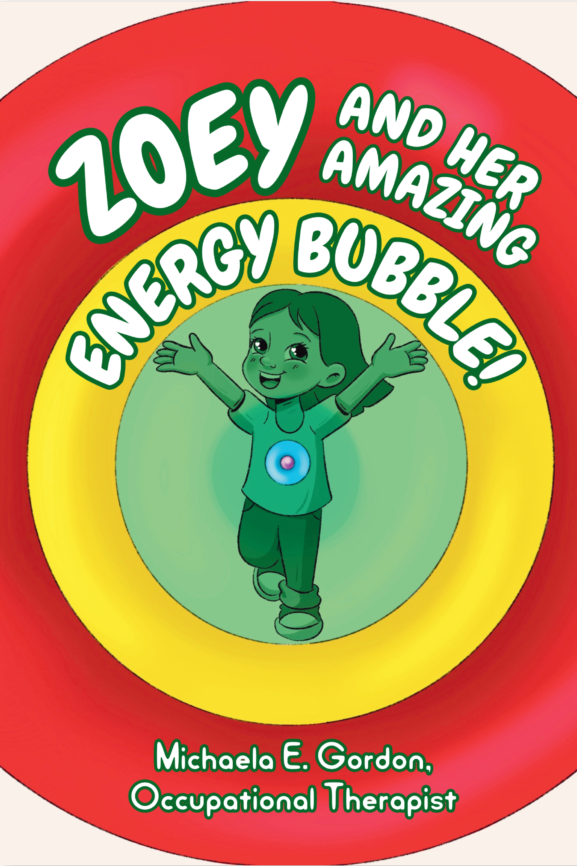

“Zoey and Her Amazing Energy Bubble!”

– Teaching Children About Self-Regulation.

“Zoey and Her Amazing Energy Bubble!” teaches children about self-regulation, emotional regulation, and sensory regulation. Introduces the concept of energy bubbles and how to change energy levels when with other people.

Best suited for children ages 5–9 with ADHD, Autism, Sensory Processing Challenges, Anxiety, and the Highly Sensitive Child.

READ ON FOR FULL DESCRIPTION

Rated 5 out of 5

Zoey Website_QR_code

You may be familiar with the terms self-regulation and emotional regulation, but have you ever heard of sensory regulation? If you haven’t, you may not realize that regulating sensory information plays a part in helping us manage our emotions, engage in goal-oriented tasks, and supports our ability to cultivate meaningful relationships. This happens because our thoughts, emotions, and the sensations we physically experience all work together to help us adapt and respond appropriately to daily situations.


Some children struggle to regulate themselves during their daily activities. This can show up as hyperactivity, inattention, impulsive decision making, strong emotional reactions, and a lack of social awareness. Parents, teachers, and adults alike can feel frustrated and at a loss when it comes to addressing these concerns. Finding the right tools to help children learn self-regulation skills is crucial to their developmental growth.


Zoey and Her Amazing Energy Bubble was written to help children understand how their thoughts, emotions, and felt sensations cause their energy levels to change. Zoey’s Grandma Rosie teaches Zoey and her brother Milo about energy bubbles, which change in size and color. They learn about how the size of their energy bubble can cause other people to feel a certain way when they are around them, especially when the bubble gets very big. Grandma Rosie teaches them about the energy bubble dial, which can be used to make their energy bubble smaller or bigger, depending on the situation.


Giving simple context to this complex human experience will help promote healthy self-
expression, communication, and connection for all.

You may be familiar with the terms self-regulation and emotional regulation, but have you ever heard of sensory regulation? If you haven’t, you may not realize that regulating sensory information plays a part in helping us manage our emotions, engage in goal-oriented tasks, and supports our ability to cultivate meaningful relationships. This happens because our thoughts, emotions, and the sensations we physically experience all work together to help us adapt and respond appropriately to daily situations.


Some children struggle to regulate themselves during their daily activities. This can show up as hyperactivity, inattention, impulsive decision making, strong emotional reactions, and a lack of social awareness. Parents, teachers, and adults alike can feel frustrated and at a loss when it comes to addressing these concerns. Finding the right tools to help children learn self-regulation skills is crucial to their developmental growth.


Zoey and Her Amazing Energy Bubble was written to help children understand how their thoughts, emotions, and felt sensations cause their energy levels to change. Zoey’s Grandma Rosie teaches Zoey and her brother Milo about energy bubbles, which change in size and color. They learn about how the size of their energy bubble can cause other people to feel a certain way when they are around them, especially when the bubble gets very big. Grandma Rosie teaches them about the energy bubble dial, which can be used to make their energy bubble smaller or bigger, depending on the situation.


Giving simple context to this complex human experience will help promote healthy self-expression, communication, and connection for all.


ABM Nano Brochure 1


Holding On, Letting Go


“Holding On, Letting Go”

– Teaching Children About Navigating Change and Loss

“Holding On, Letting Go” is a gentle story for children ages 5–9 navigating change or the loss of someone they love. Designed to support both neurodivergent and neurotypical children, this story offers warmth, grounding, and a concrete way to talk about difficult emotions, transitions, and grief.


READ ON FOR FULL DESCRIPTION

Rated 5 out of 5

Ella Website_QR_code

Most of us avoid talking about life’s changes — especially the uncertain or difficult ones — often trying to protect ourselves and our children from uncomfortable truths. Yet children are often deeply aware of, and even curious about, what it means when life shifts and transforms.


Join Ella, the little dandelion, her mom, and her grandma as they share their journey through different stages of life. With warmth and honesty, Ella learns about growth, change, and letting go — and discovers that love and memories continue on.


This story offers a gentle, concrete way to begin important conversations and leaves space for families and professionals to explore their feelings further when children are ready. Life is full of moments of holding on and letting go — this story helps children and families find gentle ways through those in-between spaces. It’s the book you may not know you need — until the moment arrives.

Most of us avoid talking about life’s changes — especially the uncertain or difficult ones — often trying to protect ourselves and our children from uncomfortable truths. Yet children are often deeply aware of, and even curious about, what it means when life shifts and transforms.

Join Ella, the little dandelion, her mom, and her grandma as they share their journey through different stages of life. With warmth and honesty, Ella learns about growth, change, and letting go — and discovers that love and memories continue on.

This story offers a gentle, concrete way to begin important conversations and leaves space for families and professionals to explore their feelings further when children are ready. Life is full of moments of holding on and letting go — this story helps children and families find gentle ways through those in-between spaces. It’s the book you may not know you need — until the moment arrives.

sunflower-3


Cal and His Amazing Attention Pie


A playful and empowering story that helps children understand what attention really is — and how it shifts throughout the day. Great for kids ages 5 to 9 who have ADHD, executive functioning challenges, sensory processing differences, or any other challenges related to attention. This book introduces Cal’s “Attention Pie” to show that different types of attention all have value and that recognizing their current attention space can help them feel more confident, capable, and in control.


READ ON FOR FULL DESCRIPTION

Rated 5 out of 5

Cal_and_His_Attention_Pie_Amazon_QR

Let’s stop asking kids to “pay attention” — and start asking, “What are you paying attention to?”


In Cal and His Amazing Attention Pie, attention is reimagined in a way that makes sense to children and the adults who support them. When Cal presents his “Attention Pie” to the class, he explains that attention is not just one thing — it is made up of different spaces inside the brain. Some moments call for Body Space. Others for Touch Space, Mental Space, or People Space.


Through Cal’s story, children learn to notice which attention space they are in, use the Attention Pie as a guide, and decide whether that space is helpful in the moment. When it isn’t, they discover gentle and practical ways to shift.
This visually rich and relatable story helps children understand that all types of attention have value. It’s not about “good” or “bad” focus — it’s about knowing what kind of attention is needed and when.


Perfect for home, classrooms, and therapy settings, this book celebrates how we move, grow, and learn — empowering children to better understand their amazing minds.

Let’s stop asking kids to “pay attention” — and start asking, “What are you paying attention to?”


In Cal and His Amazing Attention Pie, attention is reimagined in a way that makes sense to children and the adults who support them. When Cal presents his “Attention Pie” to the class, he explains that attention is not just one thing — it is made up of different spaces inside the brain. Some moments call for Body Space. Others for Touch Space, Mental Space, or People Space.


Through Cal’s story, children learn to notice which attention space they are in, use the Attention Pie as a guide, and decide whether that space is helpful in the moment. When it isn’t, they discover gentle and practical ways to shift.
This visually rich and relatable story helps children understand that all types of attention have value. It’s not about “good” or “bad” focus — it’s about knowing what kind of attention is needed and when.


Perfect for home, classrooms, and therapy settings, this book celebrates how we move, grow, and learn — empowering children to better understand their amazing minds.


You Are a Supernova!


A lyrical and beautifully illustrated story that reminds children they are made of stardust — powerful, worthy, and deeply connected to something bigger than themselves. Great for children ages 4 to 10 who want to know they are a supernova, this story helps young readers understand that being human means feeling deeply, growing through challenges, and knowing they are loved exactly as they are.


READ ON FOR FULL DESCRIPTION

Rated 5 out of 5

You_Are_a_Supernova_Amazon_QR_Code-lg


The Energy Bubble Model


The Energy Bubble Model is a practical and visually accessible framework designed to help children better understand their emotions, the sensations they are processing, and how they co-regulate with others. Created for therapists, educators, and caregivers, this manual combines neuroscience-informed concepts with hands-on activities, visuals, worksheets, and real-world strategies to support regulation and emotional awareness across environments.


READ ON FOR FULL DESCRIPTION

Rated 5 out of 5

The Energy Bubble Model is a comprehensive regulation framework designed to help children better understand their emotions, sensory experiences, energy levels, and connection with the people and environments around them.


Grounded in concepts related to neuroscience, interoception, sensory processing, emotional development, and co-regulation, the Energy Bubble Model introduces a visual and accessible way for children to explore how their internal experiences change across different situations.


Rather than focusing only on behavior, the model encourages children to reflect on important questions such as:

  • Does my energy fit this situation?
  • Is there enough room for the people around me?
  • What helps my body feel more organized and regulated?


Designed for therapists, educators, and caregivers, this manual includes:

  • Explanations of the Energy Bubble framework
  • Regulation and co-regulation strategies
  • Interoception and body-awareness activities
  • Sensory processing supports
  • Visual tools and printable worksheets
  • Practical applications for home, school, and therapy settings


The Energy Bubble Model encourages children to develop greater awareness, flexibility, and understanding of how their bodies, emotions, and environments interact. By creating a shared language for regulation, children can begin to better understand themselves, connect with others, and participate more successfully across environments.

The Energy Bubble Model is a comprehensive regulation framework designed to help children better understand their emotions, sensory experiences, energy levels, and connection with the people and environments around them.


Grounded in concepts related to neuroscience, interoception, sensory processing, emotional development, and co-regulation, the Energy Bubble Model introduces a visual and accessible way for children to explore how their internal experiences change across different situations.


Rather than focusing only on behavior, the model encourages children to reflect on important questions such as:

  • Does my energy fit this situation?
  • Is there enough room for the people around me?
  • What helps my body feel more organized and regulated?


Designed for therapists, educators, and caregivers, this manual includes:

  • Explanations of the Energy Bubble framework
  • Regulation and co-regulation strategies
  • Interoception and body-awareness activities
  • Sensory processing supports
  • Visual tools and printable worksheets
  • Practical applications for home, school, and therapy settings


The Energy Bubble Model encourages children to develop greater awareness, flexibility, and understanding of how their bodies, emotions, and environments interact. By creating a shared language for regulation, children can begin to better understand themselves, connect with others, and participate more successfully across environments.

email 2

Let’s Stay Connected

Join my mailing list for news, updates, offers & special events.

email 2